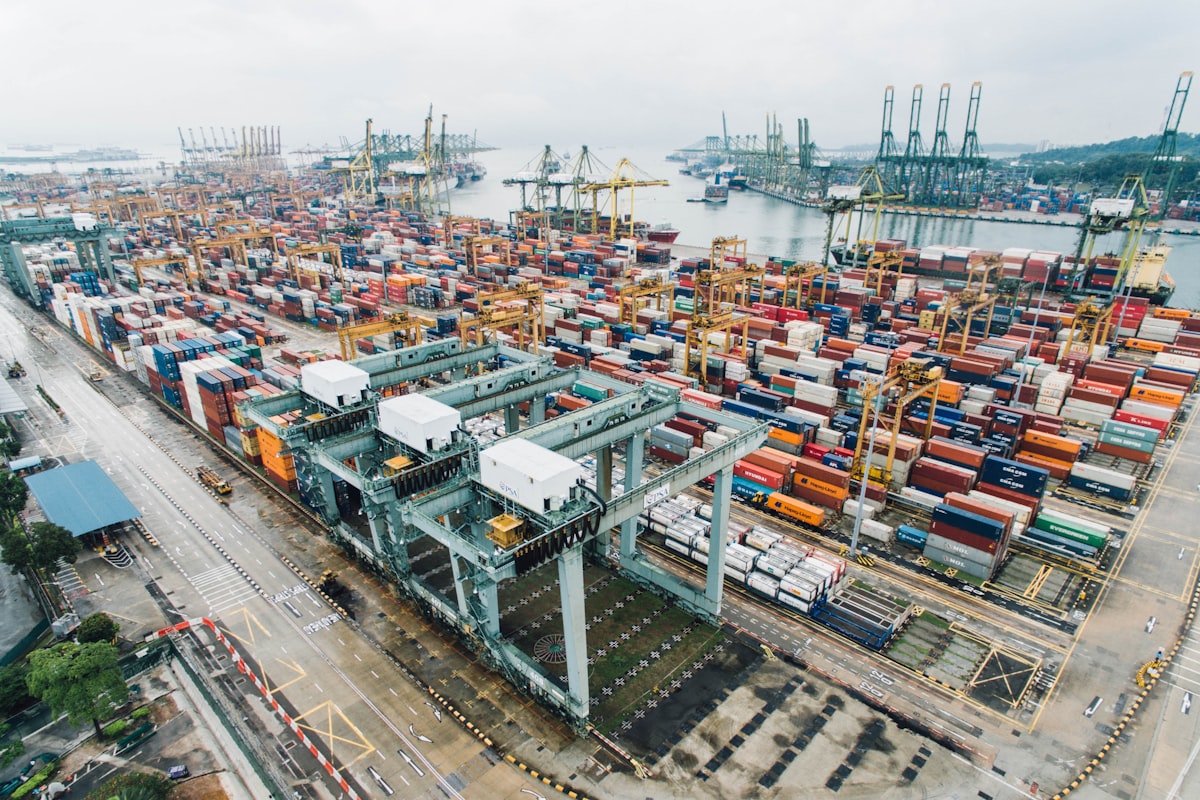
Exporting goods internationally opens markets for your products worldwide — but requires navigating export compliance regulations, documentation requirements, and logistics complexities. US exporters must comply with export control laws (EAR, ITAR, OFAC sanctions), file Electronic Export Information (EEI), and arrange competitive ocean or air freight. African exporters face phytosanitary requirements, quality inspection, and certificate of origin processes. This guide provides a practical foundation for new and growing exporters.

The Bureau of Industry and Security (BIS) controls exports of dual-use goods and technology under the Export Administration Regulations (EAR). The State Department controls defence articles under ITAR. Before exporting, determine whether your product requires an export licence.
EEI must be filed through the Automated Export System (AES) for US exports valued over $2,500 per Schedule B code, or for any export requiring an export licence. Filed by the exporter or freight forwarder before vessel departure.
All US exports must be screened against OFAC (Office of Foreign Assets Control) sanctions lists. Exporting to sanctioned countries or individuals — even inadvertently — carries severe criminal and civil penalties. Our compliance team screens all destinations and counterparties.
African agricultural exporters must obtain phytosanitary certificates from national plant protection authorities and meet the quality standards required by destination markets — including EU pesticide residue limits, GACC food safety standards for China-bound exports, and FDA requirements for US-bound food.
Many African countries require export permits or certificates for agricultural commodities, minerals, and natural resources. Our Africa teams manage export certification applications across Namibia, South Africa, and Togo.
African exporters often face challenges settling international invoices in USD. Marwest LLC's USD account holding service allows African exporters to hold export proceeds in USD, protecting against local currency depreciation.
Alibaba, Global Sources, and TradeIndia connect manufacturers with international buyers. Building a professional presence on these platforms — with high-quality photography, verified certifications, and competitive pricing — is the starting point for many exporters.
Government export promotion agencies (US Commercial Service, South Africa's TISA, Ghana Export Promotion Authority) organise trade missions and matchmaking events. These provide direct access to pre-qualified buyers.
Before committing to export, validate the market opportunity — import statistics, tariff rates, local competition, and regulatory requirements. US Census data and ITC Trade Map provide detailed import statistics by product and country.
Our freight specialists are ready to turn your questions into a concrete shipping plan. Contact Marwest LLC for a free consultation tailored to your cargo and destination.
© 2025 Marwest LLC. All rights reserved.